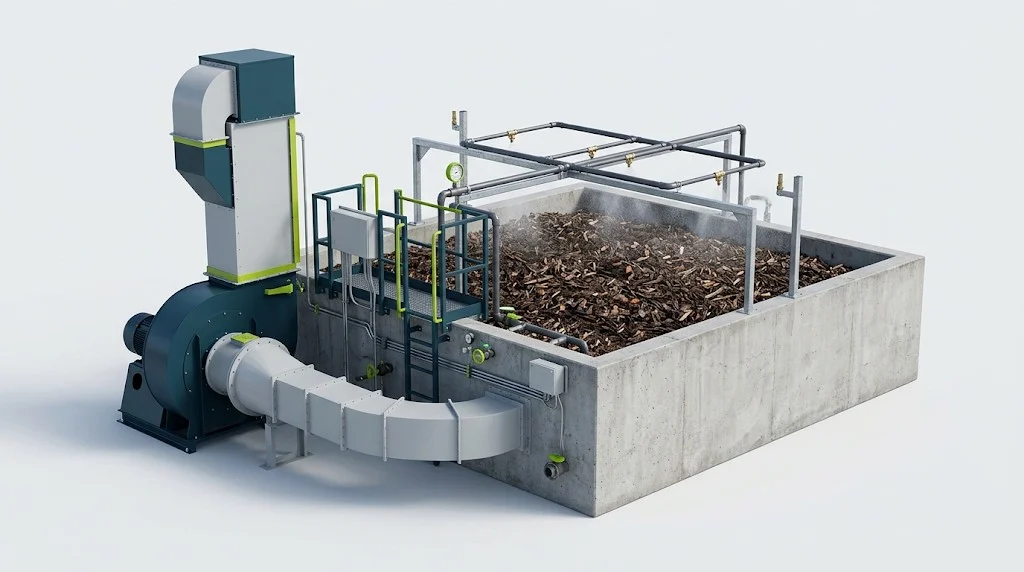
| Types | Fixed bed, irrigated bed, modular walkable grating |
| Compounds removed | VOCs, H₂S, thiols, organic sulfides (dimethyl sulfide), low-concentration ammonia, skatole, indole, fine particles |
| Bed material | Bark, wood chips, pellets, mature compost, peat, engineered media, inorganic packing, porous rock, perlite |
| Engineered media | A non-biodegradable porous support that retains moisture, with a coating that supplies nutrients and a pH buffer against acidification; it captures both water-soluble and insoluble compounds, compacts very little and has a low pressure drop |
| Engineered media density | Around 1,040 kg/m³ dry and 1,360 kg/m³ in service; supplied in bulk or in 1 m³ big bags and loaded with a shovel loader |
| Operating conditions | Constant bed temperature and humidity |
| Construction | Concrete, sandwich panel or stainless steel |
| Air flow rate | From 500 to over 200,000 Nm³/h |
| Efficiency | > 90% air cleaning; > 95% for odors |
| Bed height | 2–2.3 m |
| Bed replacement | Every 4–6 years |
| Services | Water or filtered effluent and a sewer connection; no chemical storage |
| Control | Automatic, PLC with HMI screen; humidity and temperature sensors |
| Inlet concentration | Volatile compounds at low concentration: 0.001–1 g/m³ |
| Other compounds | Toluene, styrene, methanol, ethanol, pentane, hexane, aldehydes, esters, acrylates, acetates, ethylene oxide |
| Humidification | Close to 100% in the inlet gas, so the bed does not dry out |
| Temperature | Up to 70 °C wet bulb; thermophilic operation without cooling hot gases from dryers and extruders |
| Inoculation | Only in exceptional cases, to shorten start-up; the natural flora adapts to the pollutants |
| Bed additives | A pH buffer against acidification and slow-release nutrients; topped up by surface irrigation |
| Pretreatment | Chemical scrubber if NH₃ or H₂S is very high; buffer tank if the concentration varies widely |
| Cover | Optional, to route the cleaned gas to a stack or take samples |
| Versions | Concrete, panels or container; can be installed on a roof to save space |