Home / Technologies / Odors / Biotrickling

BiologicalOdors

Biotrickling filter

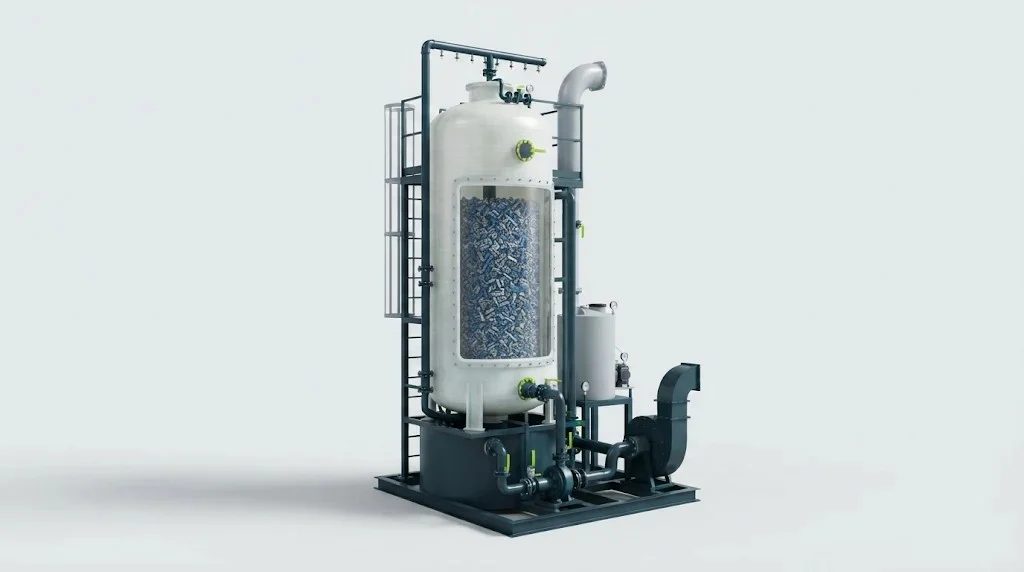
It combines a biofilter and a scrubber: microorganisms attached to inert plastic packing break down VOCs and odorous gases, while countercurrent water supplies nutrients and carries away by-products. In many cases it replaces the chemical scrubber and activated carbon.

Other technologies
Biotrickling filter – plant diagram

Chemicals

Not needed

Concentration

Also high

Packing

Structured plastic, inert

Flow rate

1,000–100,000 m³/h

Operating principle

How it works

  1. 01

    Inlet

    The gas passes through a column with structured plastic packing.

  2. 02

    Transfer

    The pollutants transfer to the biofilm and to the water flowing down countercurrent.

  3. 03

    Breakdown

    The microorganisms use the VOCs as a source of carbon and energy.

  4. 04

    Bleed and outlet

    By-products are removed with part of the liquid and biomass; a mist eliminator cleans the outlet gas.

Specifications

Technical data

Operating principleBiological breakdown in an irrigated bed with water recirculation
SupportInert packing: plastic rings, structured packing or volcanic rock
InoculationWith biological sludge or a suitable microbial culture; the biofilm forms on the packing
IrrigationContinuous or intermittent, with clean or recirculated water
Nutrients and pHNitrogen, phosphorus and acid or base are dosed into the loop to support biodegradation
SuitabilityCompounds with a relatively high Henry's constant; pH control makes it possible to treat compounds that produce acid metabolites (sulfur and chlorinated compounds)
Compounds removedH₂S, chloromethane, DMS, DMDS, toluene, styrene, ketones, alcohols, aldehydes, acrylates, acetates, esters, amines, ammonia, hydrocarbons
Clogging protectionNutrient limitation, protozoan grazing, periodic backwashing or chemical washing, and periodic drying of the biomass by stopping irrigation
Flow rateWater countercurrent to the gas
CompoundsWater-soluble VOCs and odorous gases
Process controlpH, nutrients and salt concentration, with periodic checks
Mist eliminatorAt the gas outlet
ChemicalsNot needed
Air flow rate1,000–100,000 m³/h
EfficiencyH₂S up to 99%; soluble VOCs 70–95%; odors > 90%

Advantages

  • No chemical consumption
  • Lower operating cost and faster payback than a chemical scrubber
  • Handles high concentrations
  • Smaller footprint than a fixed-bed biofilter
  • An existing chemical scrubber can be converted into a biotrickling filter

Field of application

  • Water-soluble VOCs and odors
  • Replacement of chemical scrubbers and carbon filters

Limitations

  • Risk of excess biomass clogging the packing
  • pH, nutrients and salts have to be controlled
  • Produces a bleed stream of liquid and biomass

Industries

Where it is used

Chemicals and pharmaceuticalsFood and beverageAnimal feedWastewater treatment plantsBiogas (desulfurization)

Datasheet

Full datasheet: Biotrickling

Dimensions, design data and operating ranges. Leave us your details and an engineer will send you the datasheet and tell you whether this technology fits your plant.

All technologies

Datasheet

Request the full datasheet

Choose the technology and leave us your details. An engineer who knows that technology will send you the datasheet.

  • Full technical data for the technology you choose
  • An assessment of whether it suits your gas or your effluent

Would you rather write to us directly?

info@wizzum.com

The first conversation is free and with no obligation.