Home / Technologies / Water and discharge / Electrocoagulation and electro-oxidation

ElectrochemicalWater and discharge

Electrocoagulation and electro-oxidation

These are two different electrochemical technologies with the same principle: direct current between electrodes immersed in the water. Electrocoagulation dissolves iron or aluminum anodes, forms the coagulant in the wastewater itself and separates suspended solids, oils and metals. Electro-oxidation uses insoluble anodes that produce oxidants and destroy dissolved organic matter, color or ammonium nitrogen. They are chosen according to the pollutant and can be installed separately.

Other technologies
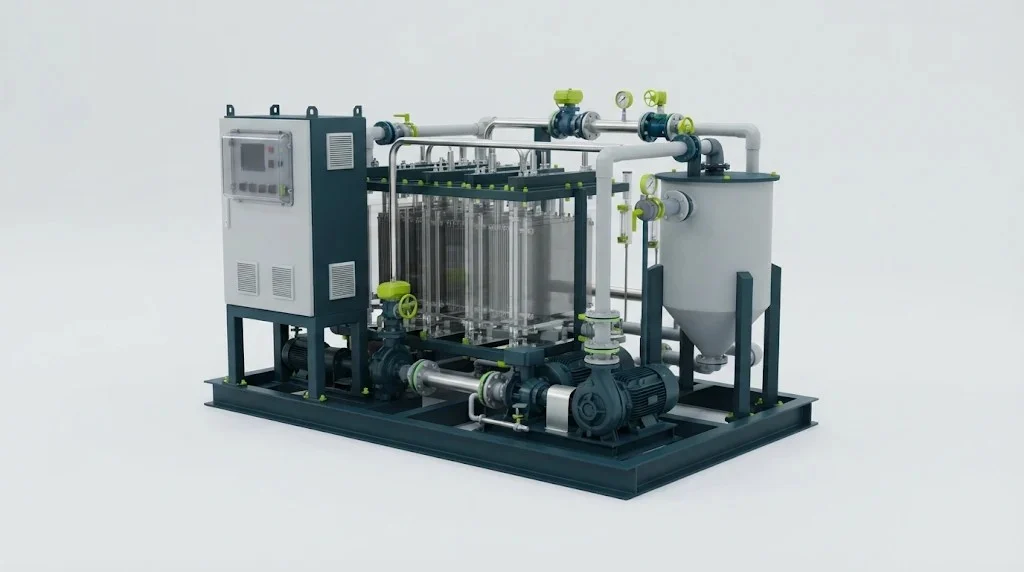
Electrocoagulation and electro-oxidation – plant diagram

Electrocoagulation · consumption

0.5–2.5 kWh/m³

Electrocoagulation · electrodes

Fe or Al, consumable

Electro-oxidation · anodes

BDD, MMO or Ti/Pt, insoluble

Current density

10–50 A/m² in both

Operating principle

How it works

Electrocoagulation

  1. 01

    Water preparation

    The wastewater is equalized and the pH and, if needed, the conductivity are corrected.

  2. 02

    Anode dissolution

    The current dissolves the iron or aluminum plates and metal hydroxides form in the water; hydrogen is released at the cathode.

  3. 03

    Coagulation and flocculation

    The hydroxides gather suspended solids, emulsified oils and metals into flocs; the hydrogen microbubbles help lift them.

  4. 04

    Sludge separation

    The flocs are separated in a lamella clarifier or by flotation; the hydroxide sludge goes to dewatering and the water leaves clarified.

Electro-oxidation

  1. 01

    Conditioning

    The pH is corrected and the chloride content is checked, since oxidant production depends on it.

  2. 02

    Cell with insoluble anodes

    Boron-doped diamond or platinized titanium anodes oxidize organic matter directly and produce active chlorine and radicals from the water and its salts.

  3. 03

    Oxidation

    The wastewater recirculates through the cell, continuously or in batches, until it reaches the target COD, color or ammonium nitrogen; no sludge forms.

  4. 04

    Polishing

    A granular activated carbon filter captures chloramines and organochlorine by-products before discharge or reuse.

Specifications

Technical data

Electrocoagulation

Operating principleAnodic dissolution of iron or aluminum: the coagulant forms in the water and hydrogen is released at the cathode
Current density10–50 A/m²
Electrode spacing1–3 cm
Energy consumption0.5–2.5 kWh/m³, depending on the water's conductivity
Electrode wear3–10 kg of plates per 1,000 m³; replacement every 3–12 months
SludgeFiner, more stable flocs and less volume than with chemical coagulation
Downstream separationLamella clarifier or flotation, and sludge dewatering
PollutantsEmulsified oils, heavy metals, dyes and suspended solids; with iron electrodes it reduces hexavalent chromium

Electro-oxidation

Operating principleDirect oxidation at insoluble anodes and indirect oxidation through the oxidants generated, mainly chlorine from chlorides (electrochlorination)
AnodesBoron-doped diamond (BDD), titanium with mixed metal oxides (MMO) or platinized titanium (Ti/Pt) and graphite; they do not wear
Current density10–50 A/m²
Cell voltage5–20 V
Operating modeContinuous, or batch with recirculation
SalinityChlorine production needs chlorides, on the order of 4,000 mg/l of NaCl
PolishingGranular activated carbon for chloramines and organochlorine compounds
PollutantsHard-to-treat organic matter, aromatic, chlorinated and phenolic compounds, surfactants, color, ammonium nitrogen, urea, nitrates, sulfides, cyanides, thiocyanates, glycols, amines, dioxanes, pharmaceuticals, pesticides and PFAS

Comparison

ElectrocoagulationElectro-oxidation
What it doesForms the coagulant in the water and separates suspended solids, oils and metalsOxidizes dissolved organic matter, color and ammonium nitrogen
ElectrodesIron or aluminum; they wearBDD, MMO or Ti/Pt; they do not wear
ResidueHydroxide sludge that has to be separated and dewateredNo sludge; chlorinated by-products may form
Next stageSedimentation or flotationActivated carbon
Usual position in the linePretreatment or a replacement for physico-chemical treatmentPolishing before discharge or reuse
Indicative footprint1–2 m² per m³/h1–2 m² per m³/h
Civil works versus equipmentApprox. 30% / 70%Approx. 30% / 70%

Advantages

  • Electrocoagulation: replaces coagulant and flocculant dosing
  • Electrocoagulation: less sludge than chemical coagulation
  • Electro-oxidation: breaks down compounds that biological treatment does not remove and improves biodegradability ahead of the biological stage
  • Electro-oxidation: produces no sludge
  • Both: compact, modular units controlled by the current

Field of application

  • Electrocoagulation: water with emulsified oils and metalworking fluids
  • Electrocoagulation: heavy metals from surface treatment and metalworking
  • Electro-oxidation: color from textiles and dyes
  • Electro-oxidation: leachate and water with ammonium nitrogen or hard-to-treat organic matter
  • Electro-oxidation: polishing before reuse or reverse osmosis; pharmaceuticals, PFAS or dioxanes

Limitations

  • Electrocoagulation: the electrodes wear and have to be replaced
  • Electrocoagulation: energy use depends heavily on the water's conductivity
  • Electro-oxidation: chloramines and organochlorine compounds may form and have to be captured
  • Both: a laboratory test with the actual wastewater is advisable before sizing

Industries

Where it is used

Surface treatmentMetalworkingTextilesChemicalsWaste managementFood

Datasheet

Full datasheet: Electrocoagulation and electro-oxidation

Dimensions, design data and operating ranges. Leave us your details and an engineer will send you the datasheet and tell you whether this technology fits your plant.

All technologies

Datasheet

Request the full datasheet

Choose the technology and leave us your details. An engineer who knows that technology will send you the datasheet.

  • Full technical data for the technology you choose
  • An assessment of whether it suits your gas or your effluent

Would you rather write to us directly?

info@wizzum.com

The first conversation is free and with no obligation.