Home / Technologies / VOCs and solvents / Recuperative oxidation

DestroysVOCs and solvents

Recuperative thermal oxidation

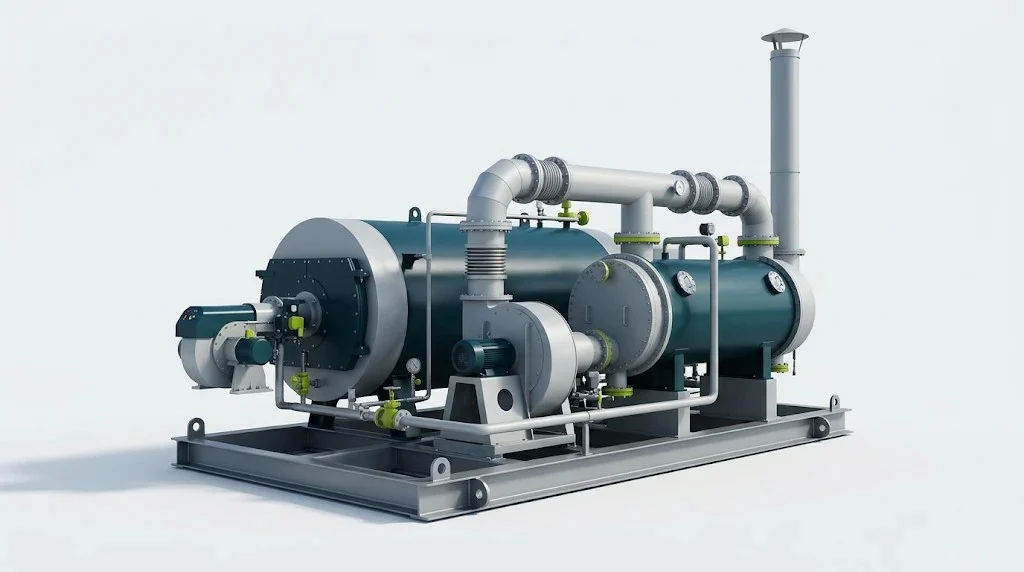
Oxidizes VOCs with a burner at high temperature and uses the heat of the gases to produce a thermal fluid (steam, hot water or thermal oil) or to preheat the incoming air. It is designed for air streams heavily loaded with pollutants. In practice it is also called an incinerator with recuperator.

Other technologies
Recuperative thermal oxidation – plant diagram

Oxidation temperature

750–950 °C; up to 1200 °C

Flow rate

1,000–10,000 Nm³/h

Air preheating

Up to 700 °C

Destruction efficiency

> 99 %

Operating principle

How it works

  1. 01

    Air inlet

    The VOC-laden air enters the oxidation chamber.

  2. 02

    Heating

    The burner raises the air temperature to 750–950 °C.

  3. 03

    Oxidation

    At that temperature the VOCs break down into CO₂ and water vapor.

  4. 04

    Heat recovery

    A heat exchanger or a waste heat boiler produces thermal oil, hot water or steam, or preheats the incoming air.

  5. 05

    Outlet

    The cleaned gases are released to the atmosphere.

Specifications

Technical data

Operating principleThermal oxidation with heat recovery at the chamber outlet
Oxidation temperatureUsually 750–950 °C; up to 1200 °C depending on the design
Heat sourceBurner
Oxidation productsCO₂ and H₂O
Heat recoveryA recuperator at the outlet uses the heat of the exothermic reaction
Possible thermal fluidsSteam, hot water, thermal oil or preheated air
Pollutant loadHigh
Autothermal operationAbove roughly 3–5 g/Nm³, depending on heat exchanger efficiency: the heat of oxidation holds the temperature with almost no fuel
Gas flow rate1,000–10,000 Nm³/h
Destruction efficiencyOver 99%
Air preheatingUp to 700 °C
Chamber designControlled temperature, residence time and turbulence
Liquid wasteIt can also oxidize liquid waste with an organic load

Advantages

  • Lower fuel use thanks to heat recovery
  • Cheaper thermal fluid, which helps pay back the investment
  • Lower operating costs
  • Lower emissions of pollutants and greenhouse gases

Field of application

  • Air streams with a high VOC load
  • Plants that need steam, hot water or thermal oil
  • Liquid waste with an organic load

Limitations

  • At low VOC concentrations it burns a lot of fuel; an RTO works better there
  • Does not treat dust or acid gases: a filter or a scrubber is needed

Industries

Where it is used

ChemicalsPaints and coatingsPrinting and packagingPharmaceuticalsWaste treatment

Datasheet

Full datasheet: Recuperative oxidation

Dimensions, design data and operating ranges. Leave us your details and an engineer will send you the datasheet and tell you whether this technology fits your plant.

All technologies

Datasheet

Request the full datasheet

Choose the technology and leave us your details. An engineer who knows that technology will send you the datasheet.

  • Full technical data for the technology you choose
  • An assessment of whether it suits your gas or your effluent

Would you rather write to us directly?

info@wizzum.com

The first conversation is free and with no obligation.