Home / Technologies / VOCs and solvents / RTO

DestroysVOCs and solvents

Regenerative thermal oxidizer (RTO)

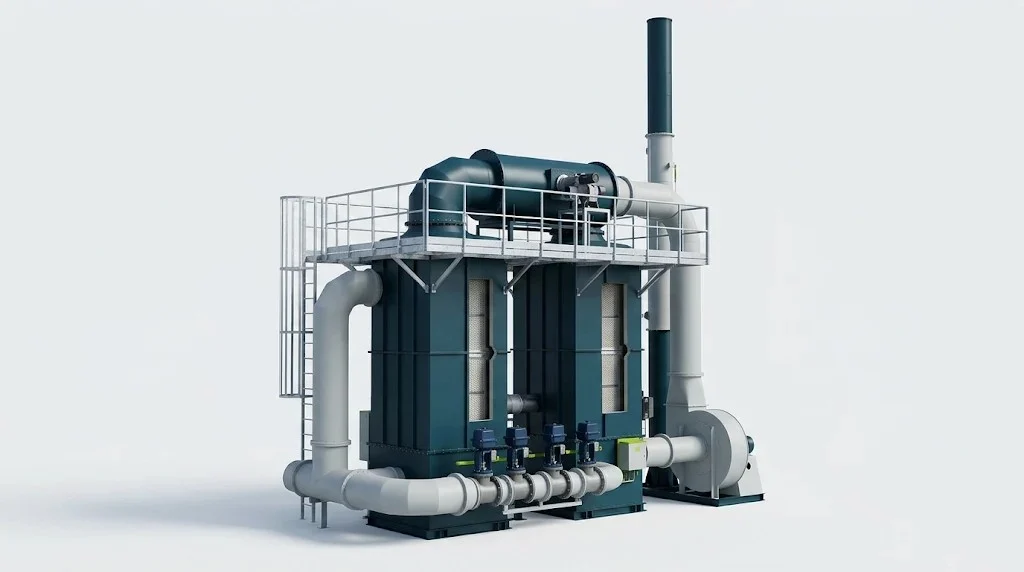
Destroys VOCs and other hazardous organic pollutants by oxidizing them at high temperature. A bed of inert ceramic material stores the heat of combustion and gives it back to the incoming gas in the next phase, which cuts fuel use considerably. In industry it is also called a regenerative incinerator.

Other technologies
Regenerative thermal oxidizer (RTO) – plant diagram

Removal efficiency

> 99 %

Heat recovery

90–97 %

Oxidation temperature

750–1300 °C

Autothermal operation from

1.5 g/Nm³ of VOCs

Operating principle

How it works

  1. 01

    Preheating

    The gas passes through the hot ceramic bed, which raises its temperature before the combustion chamber.

  2. 02

    Oxidation

    In the combustion chamber, with a burner and automatic temperature control, the VOCs are oxidized to CO₂ and H₂O.

  3. 03

    Heat recovery

    The cleaned gases give off their heat to a second ceramic bed, which stores it for the next cycle.

  4. 04

    Flow reversal

    The switching valves reverse the gas flow between the towers, so the process runs continuously.

Specifications

Technical data

Operating principleThermal oxidation with heat regeneration in ceramic beds
Removal efficiencyOver 99%
Oxidation temperatureUsually 750–950 °C; up to 1300 °C depending on the design
Heat recovery90–97 %
Autothermal operationNo support fuel above 1.5 g/Nm³ of VOCs
Surplus heatTo heat air, produce hot water or heat thermal oil
Configurations2 towers in most cases; 3 towers when maximum efficiency is required (for odors, for example)
Oxidation productsCO₂ and H₂O
Air flow rate1,000–250,000 Nm³/h
Guaranteed emission≤ 20 mg C/Nm³
HeatingNatural gas, LPG or multi-fuel, biogas or hydrogen burner; electric heating elements are also possible (see e-RTO)
Standard equipmentPainted carbon steel structure, regenerative ceramic media, burner, thermal insulation, temperature control, maintenance platform, manhole, switching valves, control panel
OptionsConstruction in AISI 304, AISI 316, nickel alloy or weathering steel (Corten type); fan with variable frequency drive; acoustic enclosure; stack

Advantages

  • Low fuel consumption thanks to high heat recovery
  • Removal efficiency above 99%
  • Low operating and maintenance costs
  • Long service life; a technology proven in many installations

Field of application

  • Large air flow rates
  • VOCs at low or medium concentration
  • Continuous processes
  • Odors, in the 3-tower version

Limitations

  • Does not treat dust, inorganic gases, heavy metals, acids or corrosive gases
  • For those pollutants it is combined with a dust filter or a wet scrubber

Industries

Where it is used

Chemicals and petrochemicalsPharmaceuticalsPaints and coatingsFoodWaste treatment and biogasMaterials manufacturing and printingCosmetics (drying lines)AutomotiveFlexographic printingOil and gas

Datasheet

Full datasheet: RTO

Dimensions, design data and operating ranges. Leave us your details and an engineer will send you the datasheet and tell you whether this technology fits your plant.

All technologies

Datasheet

Request the full datasheet

Choose the technology and leave us your details. An engineer who knows that technology will send you the datasheet.

  • Full technical data for the technology you choose
  • An assessment of whether it suits your gas or your effluent

Would you rather write to us directly?

info@wizzum.com

The first conversation is free and with no obligation.