Home / Technologies / VOCs and solvents / Solvent scrubber

AbsorbsVOCs and solvents

Solvent scrubber

Selective absorption in a scrubbing liquid, or reaction with amines in the liquid itself. It removes compounds that acid, alkaline, oxidizing and reducing scrubbers do not treat well.

Other technologies
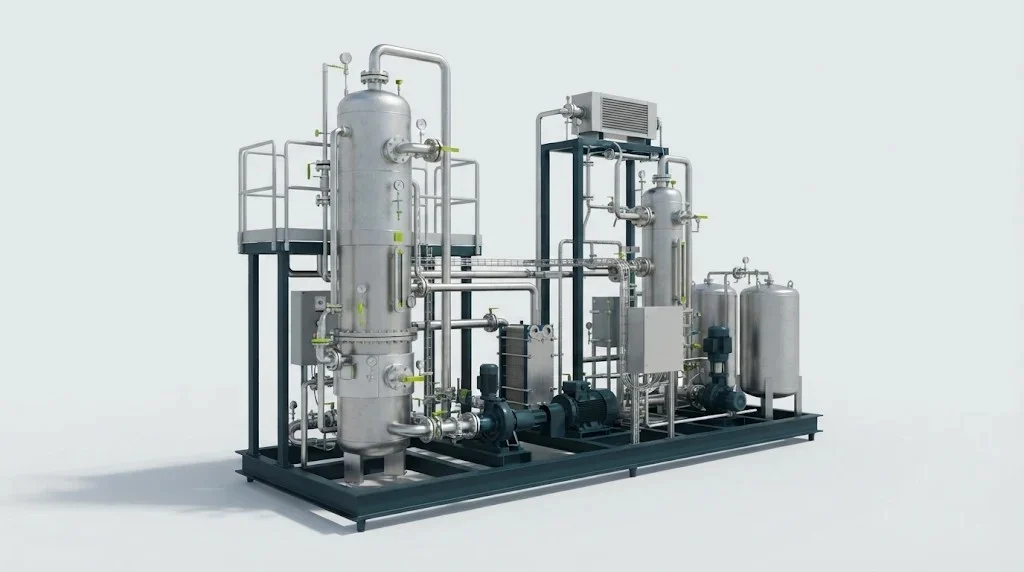
Solvent scrubber – plant diagram

Scrubbing liquid

Soluble amine, silicone oil or vegetable oil

Regeneration

Distillation, or stripping followed by biological treatment

Control

pH and conductivity

Efficiency

90–99% depending on solubility

Operating principle

How it works

  1. 01

    Absorption

    The pollutant transfers to the scrubbing liquid chosen for that compound.

  2. 02

    Reaction

    Halogenated compounds and aldehydes react with a non-volatile, water-soluble amine (nucleophilic substitution) and form non-volatile, biodegradable compounds.

  3. 03

    Control

    The pH is corrected with additional solvent or with sodium hydroxide; the solution is renewed based on conductivity.

  4. 04

    Regeneration

    The liquid is regenerated by distillation, or by stripping followed by biological treatment.

Specifications

Technical data

PollutantsChloromethane, bromomethane, carbon disulfide, formaldehyde, butyraldehyde, aliphatic hydrocarbons
Halogenated compounds and aldehydesNon-volatile water-soluble amine (R-NH₂)
Aliphatic hydrocarbonsSilicone oil or vegetable oils as the scrubbing liquid
KineticsMuch faster for C1 compounds (chloromethane, bromomethane) than for C2 and higher organohalogens
pH controlWith additional solvent or, in some cases, with NaOH
Operating modeBatch or with automatic dosing
Solution renewalBased on conductivity
RegenerationDistillation, or stripping followed by biological treatment
Flow rate1,000–60,000 m³/h per tower
Efficiency90–99% depending on the compound's solubility in the liquid
Gas temperatureBest below 40 °C: absorption works better at low temperature

Advantages

  • Removes compounds that other chemical scrubbers do not
  • The amine method turns the pollutants into non-volatile, biodegradable compounds
  • The scrubbing liquid can be regenerated

Field of application

  • Halogenated VOCs and aldehydes
  • Aliphatic hydrocarbons
  • Carbon disulfide

Limitations

  • Kinetics depend heavily on the compound: C2 and higher react more slowly
  • Reagent consumption is controlled through pH

Industries

Where it is used

ChemicalsPetrochemicalsFumigation (bromomethane)Fibers and viscose (CS₂)

Datasheet

Full datasheet: Solvent scrubber

Dimensions, design data and operating ranges. Leave us your details and an engineer will send you the datasheet and tell you whether this technology fits your plant.

All technologies

Datasheet

Request the full datasheet

Choose the technology and leave us your details. An engineer who knows that technology will send you the datasheet.

  • Full technical data for the technology you choose
  • An assessment of whether it suits your gas or your effluent

Would you rather write to us directly?

info@wizzum.com

The first conversation is free and with no obligation.