
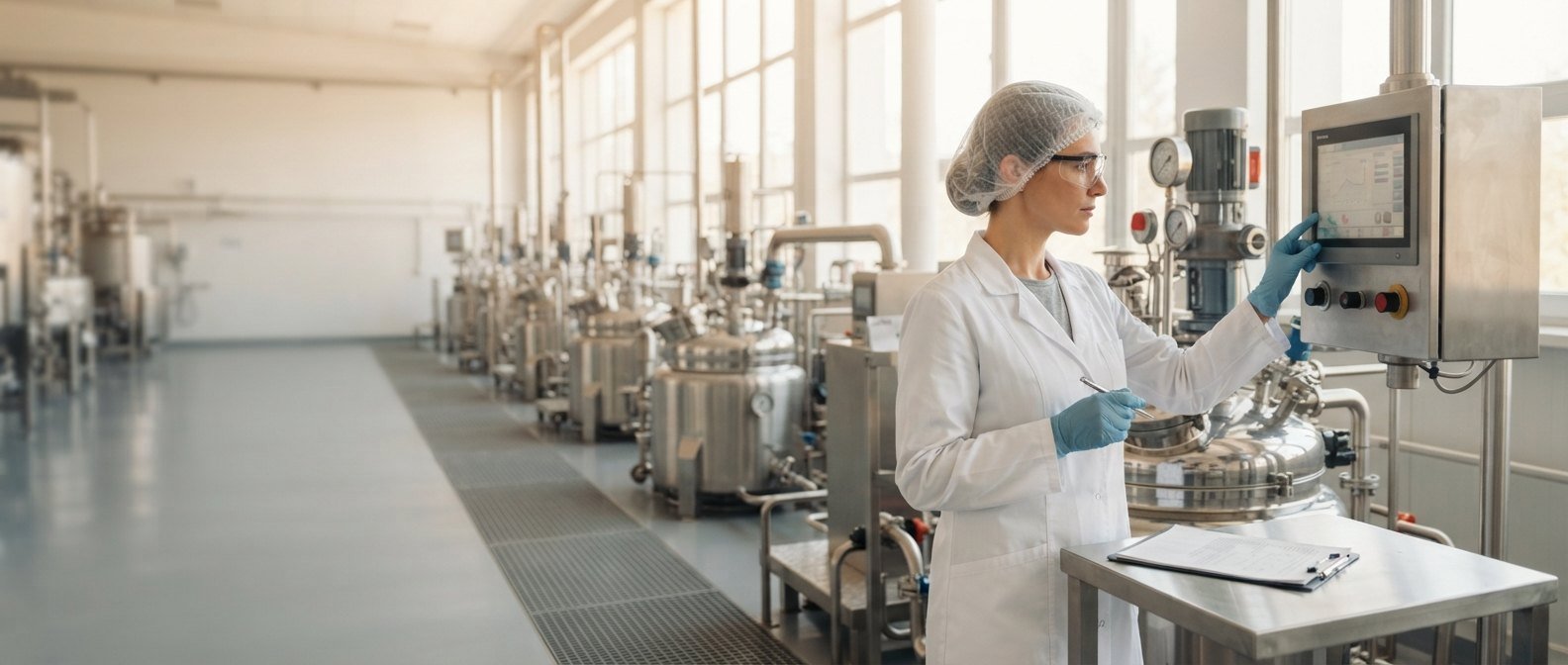
Chemical and pharmaceutical production plant with stainless steel reactors

Home / Industries / Chemicals, pharmaceuticals and cosmetics

01

Chemicals, pharmaceuticals and cosmetics

Synthesis, formulation, filling and reactor cleaning. Production runs in batches, so both the off-gas and the effluent change composition from one week to the next. A unit sized for today’s product can fall short with next month’s.

Fine chemicals and APIPharmaceutical formulationCosmetics and perfumeryDetergents and hygieneAgrochemicals

Where the problem starts

ProcessReleases to airDischarges to water
Reactors and synthesisVents with solvent, HCl or ammoniaMother liquors with high COD and salts
Drying and centrifugingConcentrated VOCs in short peaksCondensates containing solvent
Storage and loadingVapours from tanks and road tankersWater from bunds and spills
Equipment cleaningCleaning solvent vapoursWater with surfactants and product residues
Formulation and fillingDust and fragrancesFoaming water with fats and surfactants

Industry challenges

Emission challenges

5
  1. 1VOC flow and concentration change with every batch; the daily average is misleading and the peaks have to be measured.
  2. 2Halogenated or sulphur compounds form acid gases when oxidised, so a scrubber has to be added downstream.
  3. 3Mixtures close to the lower explosive limit: safety comes before performance.
  4. 4Odours at the wastewater plant and in the equalisation tanks.
  5. 5Many small sources spread across the site, where you have to decide whether to collect them or treat them separately.

Water challenges

5
  1. 1High, poorly biodegradable COD: active ingredients, surfactants and solvent residues.
  2. 2Salinity and adsorbable organic halogens (AOX) that hold back biological treatment.
  3. 3Very different streams that are better segregated at source than mixed in one tank.
  4. 4Cleaning water with load peaks that are hard to even out.
  5. 5Purified water for the process, and growing pressure to reuse water or move towards zero liquid discharge.

Regulatory framework

BAT conclusions for the chemical sector: CWW for wastewater and WGC for waste gases. Where solvents are used, Spain’s Royal Decree 117/2003 also applies.

99.9%VOC destruction

Case · Pharmaceuticals (API)

High-concentration vents with chlorinated solvents. Solved with an RTO followed by a quench and a scrubber to remove the acid gases formed during oxidation.

Read the case study

InputVents with chlorinated solvents
StageRTO
StageQuench
StageAcid gas scrubber
Result99.9% of VOCs destroyed

Facing a similar problem at your plant?

Tell us what you emit or discharge and which limit you have to meet. The first conversation is free of charge.

Tell us about your case

Environmental engineering for industry.
Industrial wastewater, emissions and odors.

OFFICE

Avda. Cabrera, 36
08302 Mataró (Barcelona), Spain
info@wizzum.com

© 2026 Wizzum. All rights reserved.