
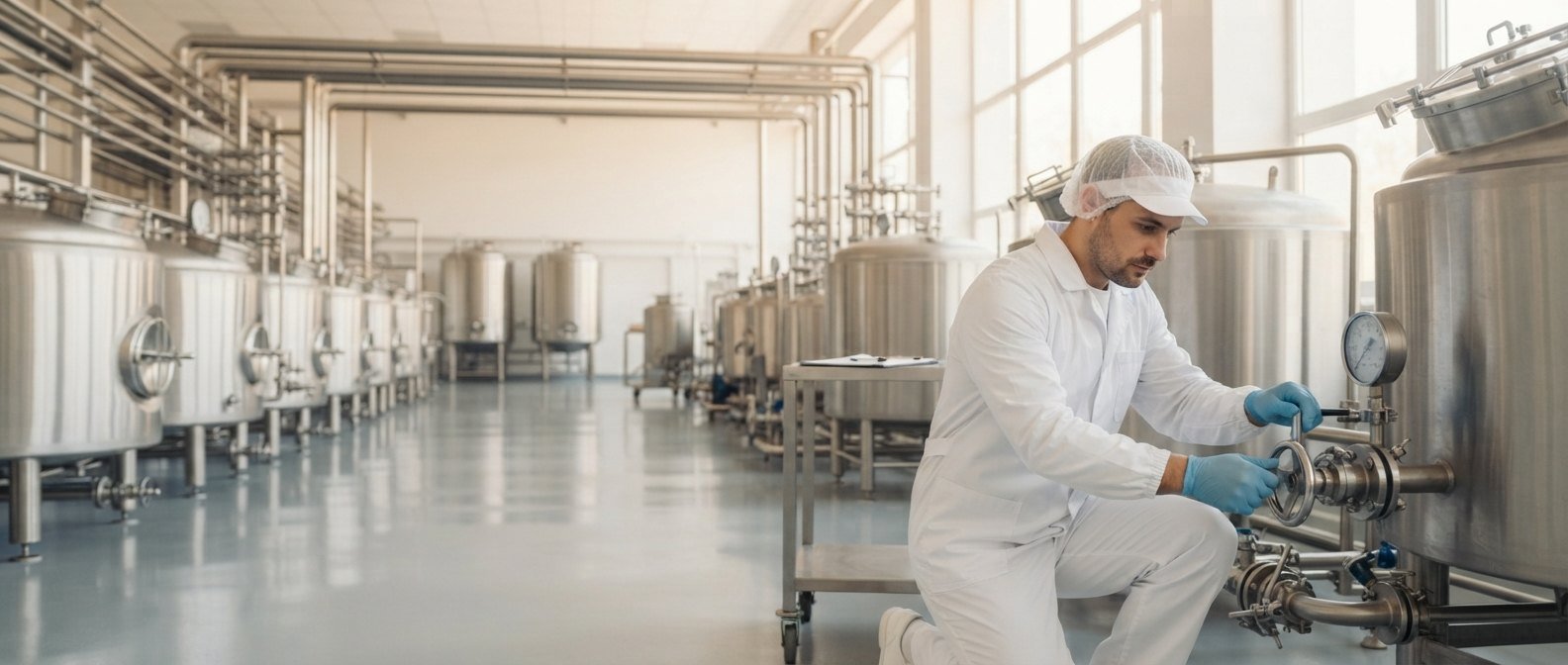
Stainless steel tanks in a beverage plant with the filling line in the background

Home / Industries / Food, beverages and animal feed

02

Food, beverages and animal feed

Slaughterhouses and meat processing, dairies, wineries, canned vegetables, animal feed, pet food and by-product processing. The load is organic and biodegradable, which makes treatment easier, but flows are large and many plants have neighbours close by.

Slaughterhouses and meatDairyWineries and beveragesFeed and pet foodOils and fatsCanned vegetables

Where the problem starts

ProcessReleases to airDischarges to water
Cooking, frying and roastingOdour, VOCs and grease aerosolsWater with oils and fats
Pellet drying and coolingHumid air with odour and dustCondensates
Slaughter and cuttingOdour from by-productsBlood, fat and solids with very high COD
Line cleaningNo significant emissionCaustic, acids and chlorinated disinfectants; pH swings
Fermentation and wineryEthanol and CO₂Vinasse and lees, concentrated during harvest

Industry challenges

Emission challenges

5
  1. 1Odour is noticed at very low concentrations and is measured in odour units, not mg/m³: you need olfactometry to know your starting point.
  2. 2Very large air flows with a low load, which are expensive to treat thermally.
  3. 3Hot, humid, greasy air that fouls filters and beds unless it is conditioned first.
  4. 4Flour, sugar and grain dust, with an explosion risk in filters and silos.
  5. 5Ammonia, H₂S and mercaptans from by-products and from the wastewater plant itself.

Water challenges

5
  1. 1High organic load: BOD, fats and suspended solids that have to be removed before biological treatment.
  2. 2Nitrogen and phosphorus above the discharge limit.
  3. 3Seasonal flows and peaks during cleaning shifts, which call for good equalisation.
  4. 4Large quantities of sludge and floated fat, with a disposal cost that weighs on the accounts.
  5. 5High water consumption, with pressure to recover part of it for cleaning or utilities.

Regulatory framework

BREF for food, drink and milk (FDM) and BREF for slaughterhouses and animal by-products. Odour limits are usually set in each plant’s permit and in local bylaws.

18,000 m³/hof air treated

Case · Vegetable oil

Venturi bioscrubber and bag filter, designed and certified for ATEX. VOCs and dust below the limits, running continuously with minimal maintenance.

Read the case study

InputAir with VOCs and dust
UnitsVenturi bioscrubber and ATEX bag filter
ResultVOCs and dust below the limits

Facing a similar problem at your plant?

Tell us what you emit or discharge and which limit you have to meet. The first conversation is free of charge.

Tell us about your case

Environmental engineering for industry.
Industrial wastewater, emissions and odors.

OFFICE

Avda. Cabrera, 36
08302 Mataró (Barcelona), Spain
info@wizzum.com

© 2026 Wizzum. All rights reserved.