
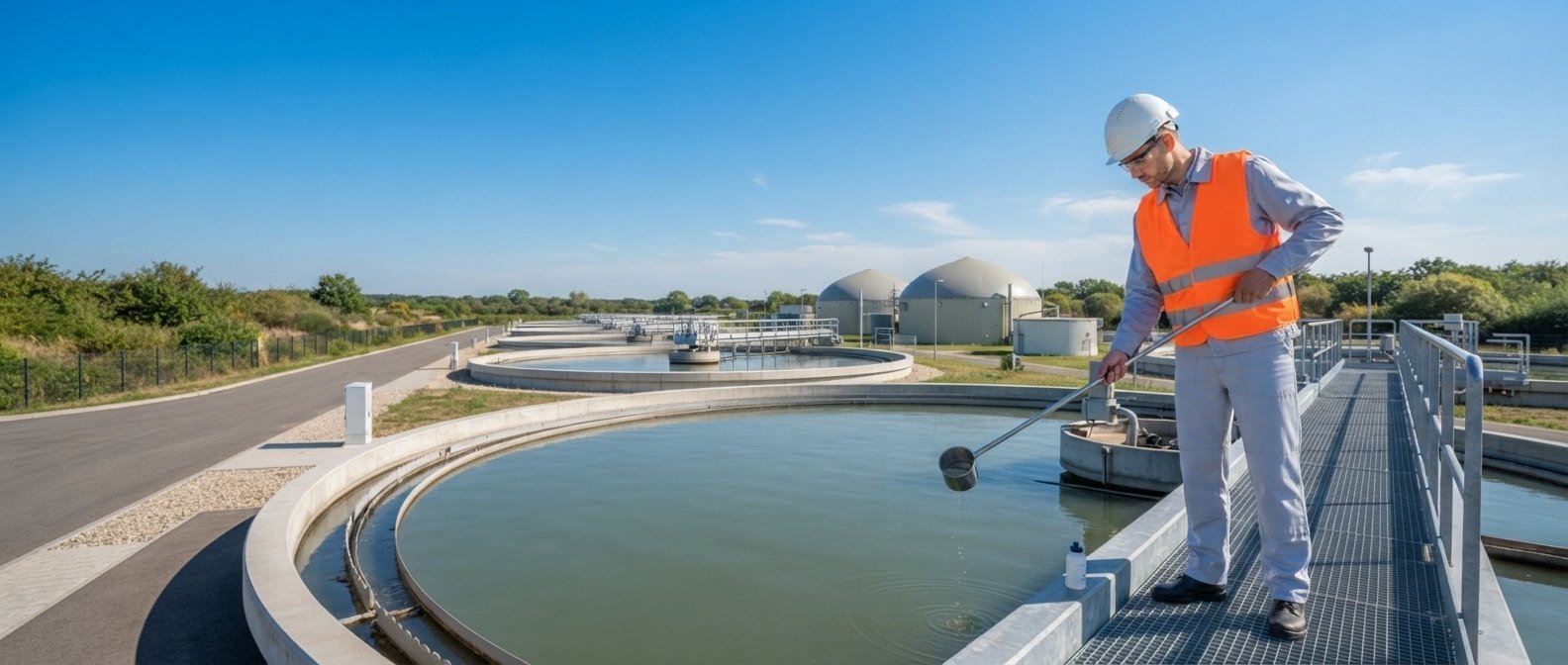
Wastewater treatment plant with aeration basins, clarifiers and biogas digesters

Home / Industries / Waste, wastewater treatment and biogas

07

Waste, wastewater treatment and biogas

Waste management and treatment facilities, composting plants, landfills, wastewater treatment plants, manure processing and biogas and biomethane plants. What comes in changes every day, and odour is the first cause of conflict with the neighbourhood.

CompostingLandfillsBiogas and biomethaneWastewater plantsLiquid wasteManure

Where the problem starts

ProcessReleases to airDischarges to water
Reception and storageOdour and VOCsLeachate and cleaning water
Composting and biodryingAmmonia, odour and bioaerosolsLeachate with ammonium
Anaerobic digestionBiogas with H₂S and siloxanesDigestate rich in nitrogen
LandfillMethane and odourSaline leachate with refractory COD
Liquid waste and recyclingVOCs; metal-bearing dust in battery recyclingConcentrates with metals and oils

Industry challenges

Emission challenges

5
  1. 1Odours from H₂S, ammonia and sulphur compounds in reception, composting and the sludge line, and methane leaks at landfills.
  2. 2Large, open buildings: enclosing and ventilating them properly costs as much as the treatment.
  3. 3Biogas cleaning (H₂S, siloxanes) before the engine or the upgrade to biomethane.
  4. 4VOCs in industrial waste treatment and metal-bearing dust in battery recycling.
  5. 5Ammonia from the storage and treatment of manure and digestate.

Water challenges

6
  1. 1Landfill leachate with ammonium, salts and COD that biological treatment does not remove; concentrating it reduces the volume sent off site.
  2. 2Digestate and manure rich in nitrogen, which can be recovered as fertiliser.
  3. 3Effluent that changes with every waste stream entering the plant.
  4. 4Acceptance limits at the receiving wastewater plant (COD, AOX) that require a final polishing step.
  5. 5Sludge: dewatering it well is the most direct way to cut disposal costs.
  6. 6Recovery: in battery recycling, lithium, nickel and cobalt are recovered from the effluent as products.

Regulatory framework

BREF for waste treatment and BREF for waste incineration. Odour limits are set in each facility’s permit.

1,200 Nm³/hof biogas with no detectable siloxanes

Reference case · Landfill (Desotec)

Landfill near Madrid that feeds a cogeneration engine with biogas. It contained 15 to 30 mg/m³ of siloxanes, which turn into silica inside the engine. A mobile activated carbon filter brings them below the detection limit, with a carbon change planned every eight months.

Read the case study

InputBiogas with 15 to 30 mg/m³ of siloxanes
StageMobile activated carbon filter
End useCogeneration engine

Facing a similar problem at your plant?

Tell us what you emit or discharge and which limit you have to meet. The first conversation is free of charge.

Tell us about your case

Environmental engineering for industry.
Industrial wastewater, emissions and odors.

OFFICE

Avda. Cabrera, 36
08302 Mataró (Barcelona), Spain
info@wizzum.com

© 2026 Wizzum. All rights reserved.